Category Archives: Mixed Media

Filmstrip Challenge

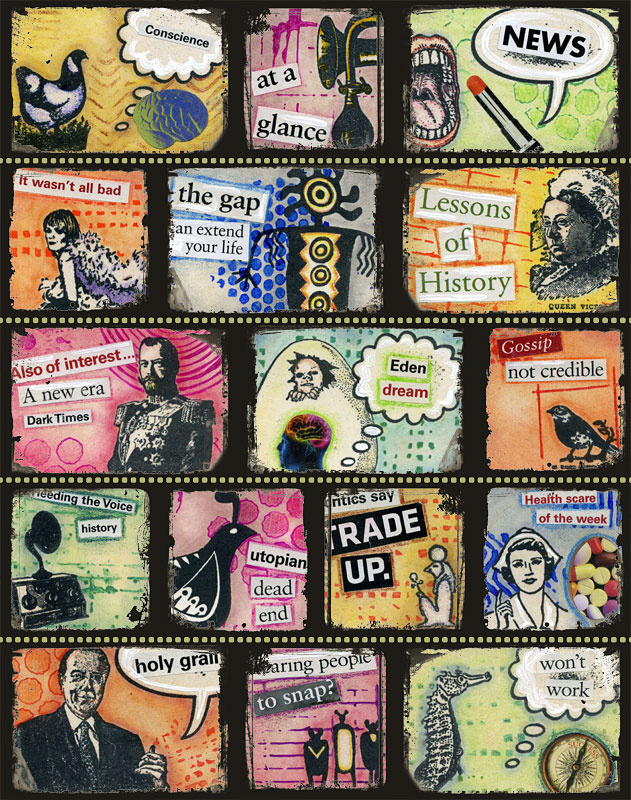
Artwork after scanning and adding a digital layer that resembles filmstrips.

I had so much fun participating in a sketch challenge recently that I decided to make an effort to enter more. RubberStampMadness magazine is currently running a Filmstrip Challenge which appealed to me. Above is my entry. There are still a few days left before the deadline if you want to get in on the fun – here are the entry guidelines.

Though I’ve been rubber stamping for well over 20 years, I haven’t done a whole lot of coloring in of rubber stamps. This project helped me to get some practice and was an opportunity to experiment with mixed media.

The first thing I did was to cut out a bunch of 2 x 2 inch and 2 x 3 inch pieces of scrap paper which would become the individual “frames” in the finished artwork. Then I stamped images on them in black waterproof ink.

The next step was to give each section it’s own background color with decorative chalks and old eyeshadow. To apply I used Q-tips, sponge tip makeup applicators and Fantastix by Tsukineko which are a great help in getting color into  tight areas around the edges of the stamped images.

Next I sprayed the paper pieces with workable spray fixative to hold the chalk in place, then I coated them with a thin layer of matte medium and let it dry. The workable fixative allowed me to brush on matte medium without the powders smearing and the purpose of the matte medium is twofold – it’s the glue I will use to attach the images and words I cut from magazines, and it keeps the markers I’ll apply later from smearing the black ink that I stamped.

The next step was to figure out words to put in the word and thought balloons I had stamped. It would be a lot of fun to tell a coherent, planned out story with this format but I couldn’t think of any ideas for a story so I did what I often do, I relied on the random and let my subconscious guide me. Cutting out pictures from magazines has been a reliable way for me to tap into the subconscious part of my brain for decades. I picked up some discarded magazines that I hadn’t cut up yet and went through them looking for words that piqued my interest. Along the way I cut out appealing pictures – some I put aside to use in other projects and a few I used for this one. I grouped the words on my work surface into combinations that appealed to me and matched the words or groups of words with images. Some of the results make sense to me, some don’t and it’s likely the ones that mean something to me won’t mean the same thing to others and vice versa. That’s one of the fun things about art!

I then glued the cut-out images and words in place by brushing the backs of them with matte medium and smoothing them in place with an old credit card. One way to reduce the risk of wrinkling the paper is to coat both sides of the pieces with matte medium and let dry before wetting the backs again to apply. It’s extra work but it’s worth it for good results. You can speed up drying with a heat tool so your work session isn’t interrupted. (It sounds funny to say “work session” – this was play!)

If you prefer instead of gluing in cut-out words you can write words in the balloons or use word rubber stamps or stickers.

My next step was to take each section and highlight the stamped images with a little color here and there and add some texture to the backgrounds with stencils from The Crafter’s Workshop. I like the way some of the textures vaguely suggest the “dot gain” effect that you often see in comic books. My coloring implements for this project were Sharpie markers and Prismacolor pencils. Both will color just fine over the matte medium but if you want to use different media, do some tests on scrap paper first to see if the surface will accept the color. I could have made masks to protect the areas I did not want to stencil on but to save work I relied on my eye to tell me where to stop. I only went onto the white word areas on a couple of spots so I decided to touch up these areas later with acrylic paint to disguise my mistakes. If you decide to sponge ink through the stencils you will need to make masks.

I glued the individual “frame” pieces down on a piece of archival cardstock with Yes Glue. Then I got out a tiny paintbrush and touched up the white areas and I liked the way the bright white looked so I added white highlights here and there all over the artwork where I thought it needed it. I liked the effect, it added a little extra “pop”.

The next image shows what my artwork looked like before I scanned it and added digital enhancements.
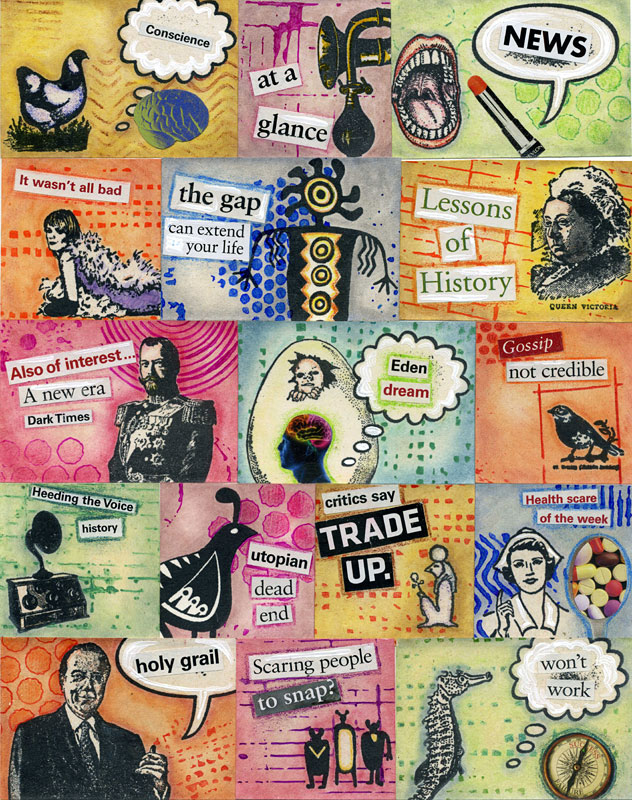
Here is my artwork before I added any digital enhancements.

Stamp credits:

Row 1, left to right: Unknown, Carolyn’s Stamp Store, Unknown, All Night Media, Carolyn’s Stamp Store

Row 2: Viva LasVegasStamps, Carolyn’s Stamp Store, Unknown

Row 3: Viva LasVegasStamps, Viva LasVegasStamps, Carolyn’s Stamp Store, 7gypsies

Row 4: Unknown, Carolyn’s Stamp Store, Chronicle Books, All Night Media

Row 5: Viva LasVegaStamps, Carolyn’s Stamp Store, Carolyn’s Stamp Store, Carolyn’s Stamp Store

After scanning in the image, I opened it up in Photoshop and added a layer for a faux filmstrip effect which I made from a couple of these free digistamps. I may print out this “filmstrip” layer on clear transparency film and mount it over the original artwork with brads or eyelets to display it.
A Road Trip Journal for Dad – Part 1

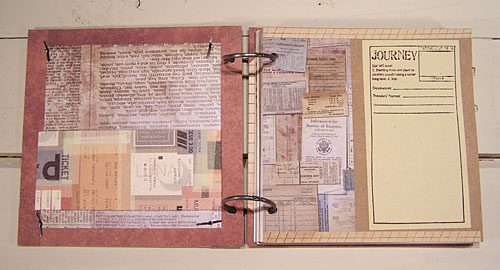
In June of this year I took a trip with my Dad to Toronto and New York City. I knew ahead of time that we would be traveling on Father’s Day, so I made a gift to present to him on the trip – a handmade journal for him to write in each day, which he did. The journal was designed so that after the trip we could add photos and ephemera and perhaps write more about our memories. I’m in the process of getting both of our photos printed so we can start working on it. I expect this will be a long term project and we will enjoy the time together that we spend on it and memories of the great trip we had. Below are photos of some of my favorite parts of the journal, as they looked before any content was added. In the future I’ll be sharing some our favorite layouts as we get them done.

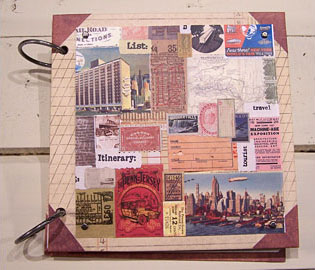
Cover of journal
Here is the front cover of the journal. It’s decorated with a collage that is protected by a piece of acetate. The small word rubber stamps are from Carolyn’s Stamp Store.
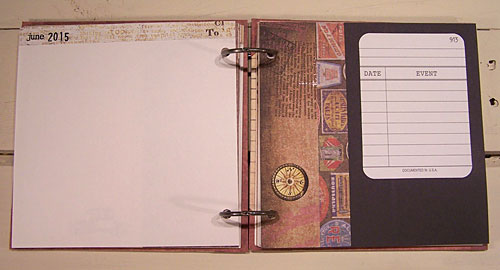
Inside front cover and first page
Inside front cover and first page. The inside front cover has a pocket for holding ephemera. The large rubber stamp on the right is from 7gypsies.
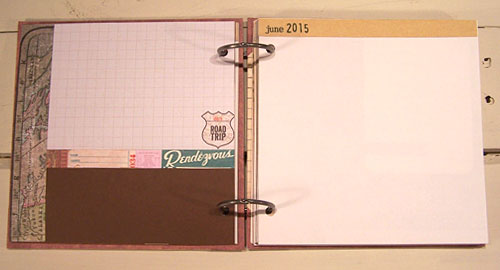
Set of two interior pages
On the left I used a trimmed Project Life card, part of the collage I made and some decorative paper. The small rubber stamps on the right are from Carolyn’s Stamp Store.
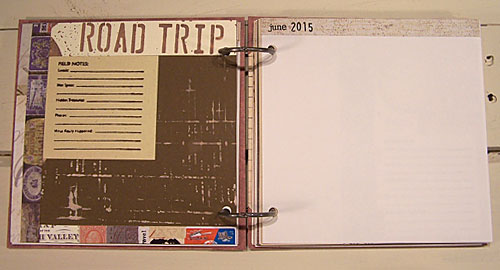
Set of two interior pages
On the left I used two different stencils from Crafter’s Workshop and a stamp from 7gypsies.
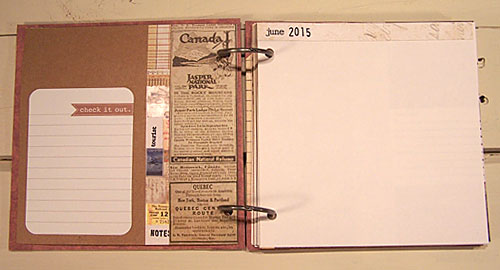
Set of two interior pages
On the left I used a Project Life card, part of my collage and decorative paper. On the right are stamps from Carolyn’s Stamp Store.
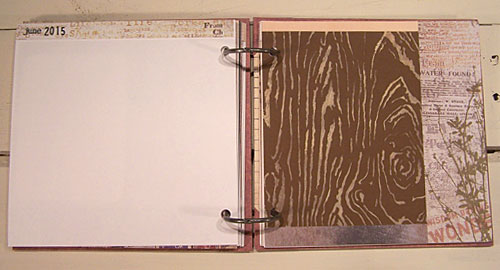
Set of two interior pages
On the right I used a stencil from Crafter’s Workshop and some decorative papers.
Set of two interior pages
On the right in addition to decorative papers I used a sticker from Tim Holtz and a Project Life card.

Here are some links to products I used to make this journal:

Months of the Year Unmounted

Year Numbers 2 Unmounted

Evocative Words II

Set of Unmounted Stamps – Journaling and Planner Words

7gypsies Medium Binding Rings Antique Brass

Tim Holtz Idea-ology Long Fasteners

Mini Road Sign 6×6 Stencil

Mini Sketch Grid 6×6 Stencil

Mini Woodgrain 6×6 Stencil

Stamping Halloween Postoids

Stamping Halloween Postoids

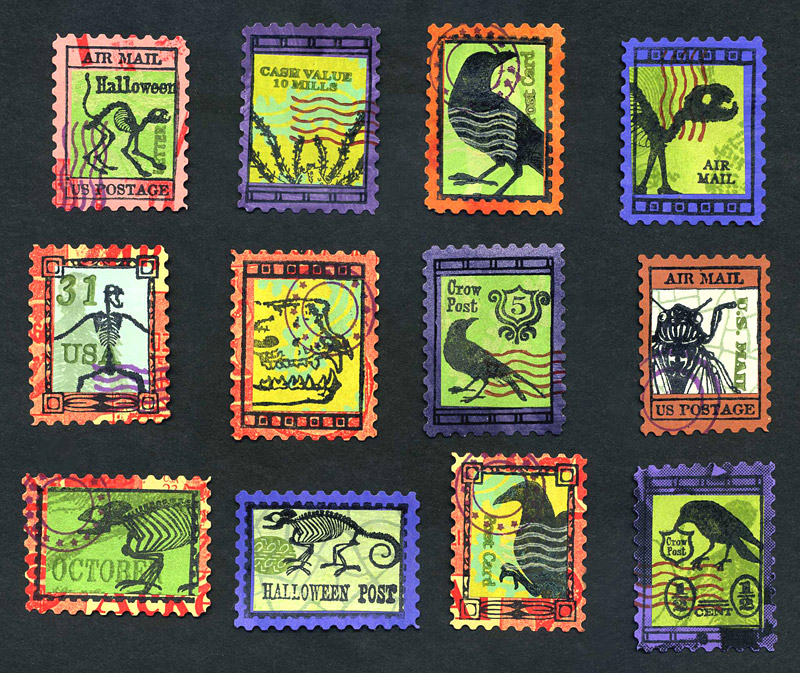
Yes it might seem a little early to talk about Halloween crafts – usually in early August I feel like I’m just getting used to the summer lifestyle. The Fall 2015 issue of RubberStampMadness is out and I want to let you know about it because my article “Stamping Halloween Postoids” is featured within! If you want to read it check the newsstand at your favorite craft retailer or go to the RubberStampMadness web site to order a copy. My four-page article will guide you step by step in creating your own Halloween Faux Postage stamps to decorate your Halloween mail and crafts.

I also have a selection of Halloween and Faux Postage rubber stamps available in my online shop Carolyn’s Stamp Store. I have complete postoid stamps and parts to help you design your own artistamps. Check out my newest designs featuring skeletal animals, crows, creepy bugs and more!

Upcycle a Metal Tin with Decoupage

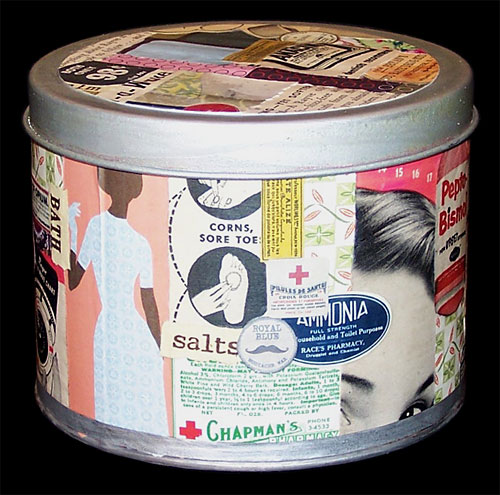
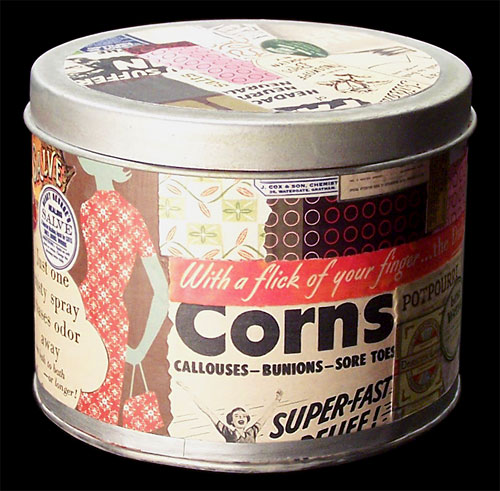
Decorative Upcycled Metal Tin

A lot of gifts and products come in decorative metal tins. Usually I don’t like the design already on the tin and prefer to cover it with something else. Turn a humdrum tin into a treasure with decoupage!

What you will need:
Images on paper to decoupage
Scissors
Scrap paper
Metal ruler
Optional: rubber stamps
Timber Brown StazOn stamping ink
Metal tin
Sandpaper
Rag
Small flat paintbrush
Water container
Paint palette with wells
Old credit card
Water based matte medium (if you prefer a glossy surface, use gloss medium)
Aleene’s Turbo Tacky Glue
Sponge
Metallic Silver StazOn or other silver paint appropriate for metal
Silver Ribbon
Cardstock

  1. To begin, gather together paper pieces with imagery that you like. This project will work best if they are on thin, opaque paper (not tissue paper). For my sample I wanted to create decorative tins for the bath, so I collected nostalgic images with a bath and personal products theme. Some of my images were downloaded from the Internet and printed for me at an office supply store. Some were cut out of magazines and catalogs, some vintage, some newer. Others were purchased from craft suppliers.You can also stamp images onto paper with permanent ink, such as the StazOn Timber Brown I used in this project. I stamped words from the rubber stamp set “Products on the Kitchen and Bath” onto narrow strips of torn scrap paper. Use any color of stamping ink you like as long as it is waterproof.
  2. Trim the images and cut to the size you want to use. Some images will look better cut out cleanly, some look good torn by using your metal ruler as a straight edge. You can also cut some with decorative paper edging scissors for variety. This project looks best if you prepare images in a variety of sizes.
  3. If you have any pieces larger than 1 inch square, there is a risk of the paper wrinkling as you apply it. Here is how to prevent wrinkling. Put down some scrap paper to protect your work surface. Pour a little matte medium into one of the paint wells. Paint the larger paper pieces on one side. Let dry, then flip over and paint the other side and let dry. Now they are ready to apply, wrinkle free!
  4. Prepare the tin to accept the paper – Sand the tin to rough up the painted surface to better accept the glued on pieces. Wipe of the dust with a damp rag. Let it dry.

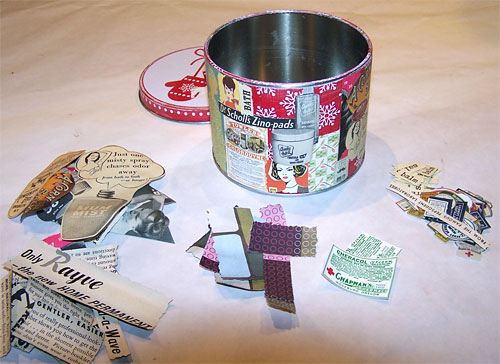
    Applying paper to tin
    Applying paper to tin
  5. Now for the fun part, applying the paper pieces! For now, set aside the lid and only work on the body of the tin. Squeeze out some Aleen’s Turbo Tacky Glue into one of the paint wells. Start with larger paper pieces first – brush some tacky glue onto the back of each, then smooth in place on the body of the tin with your fingers (we’ll be using a different technique for the lid so set the lid aside for now). If you have to, roll the handle of your brush over the paper after you apply it or burnish with the edge of an old credit card to force any excess glue out and make the paper bond tightly to the tin with no gaps. You don’t have to worry about wiping or brushing away any excess glue if you don’t have big globs of glue oozing out – it will dry clear. Repeat this process until the whole bottom portion of the tin is covered. Let dry, then coat with a varnish of matt medium.
  6. Now we’ll work on the lid and a silver ribbon to wrap around the bottom edge of the tin. Sponge silver StazOn ink or other paint or ink of your choice around the edge of the lid and about a half inch onto the top. Cut two pieces of silver ribbon that are long enough to go around a tin one time. Tape them to a piece of scrap paper and sponge them with the silver ink or paint too – even though the ribbon is already silver it’s best to match it to the ink.
  7. Once the silver ribbon is dry, glue it around bottom edge of the tin with Tacky Glue.
  8. When the silver paint on the lid is dry, varnish lid and body of the tin with matte varnish.

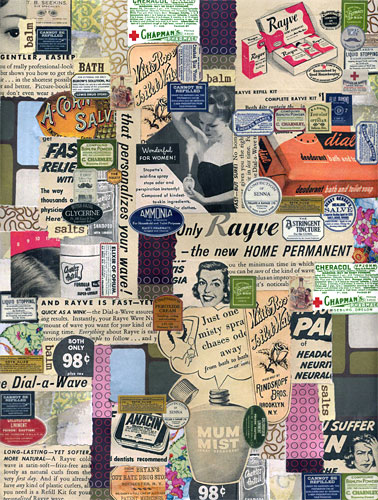
    Collage on cardstock
    Collage on cardstock
  9. Get a piece of cardstock and decoupage it all over with more pieces of decorative paper. Let dry and coat with matte varnish.

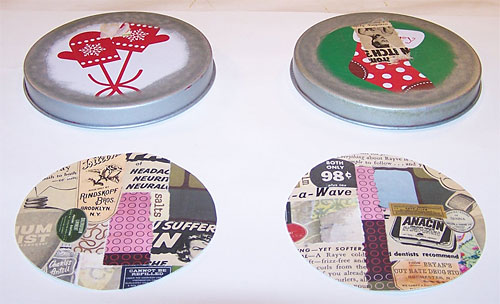
    Circles of collaged cardstock ready to glue onto lids
    Circles of collaged cardstock ready to glue onto lids
  10. When the cardstock is dry, cut out a circle that is big enough to cover any unpainted areas of the lid. Glue down this paper circle with Tacky Glue, and let dry with a weight on top to keep it flat. You’re done!

    Another finished tin
    Another finished tin

Lots of new projects

I’ve been keeping busy with lots of new work – here are some samples of some projects in progress!

06-09-14 – Here is what is on my work table –
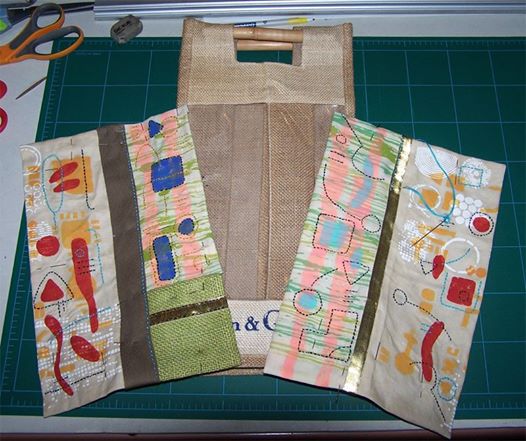
Using some of the stencil/embroidery fabric experiments to applique onto
the front of a wine bag to upcycle it. One piece is for the front and
one for the back. I’m sewing fabric pieces and ribbon onto pieces of
fusible webbing then will sew around the edges to attach to the pieces
to the front and back of the bag.

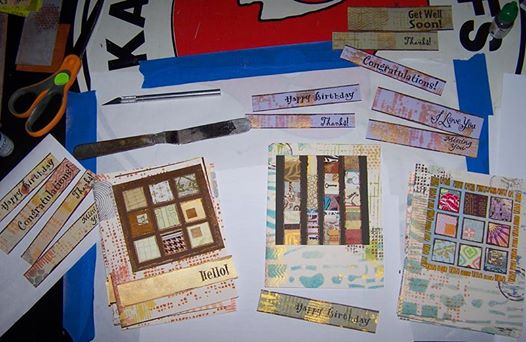
06-18-14 – On my work table today – greeting
cards right before all the parts are glued together. Techniques used –
collage, rubber stamping, stenciling. Some of the stencils are
commercial and some are designed and cut by me. Commercial stencils available here – http://carolynsstampstore.com/catalog/stencils-stenciling-supplies-c-45.html

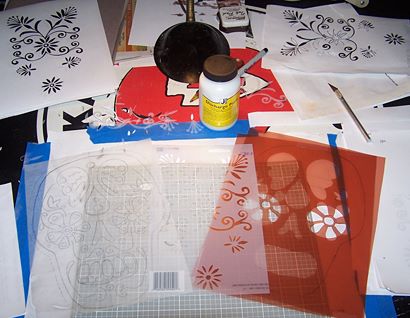
06-22-14 – On my work table today – I cut
these stencils for a Day of the Dead project. Going to experiment with
some discharge paste on fabric.

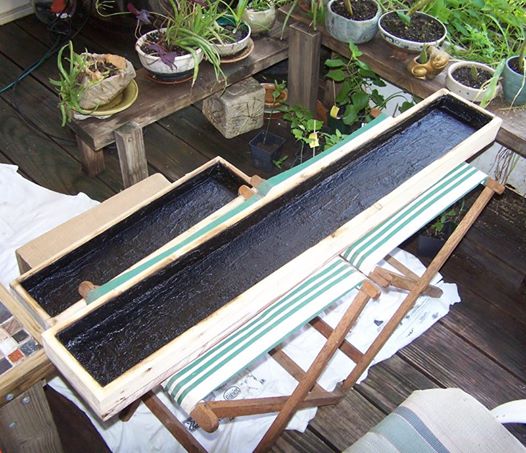
06-23-014 – Plant trays in progress – doing a
little work on my deck this morning. On Saturday my Dad cut up some
recycled wood for me to make these trays and yesterday I nailed them
together and put wood filler in the cracks. This morning I
sanded them and lined the insides with roof cement. My intention is to
display plants in these at shows and fill in with black gravel to make a
nice uniform appearance. The roof cement is meant to make a waterproof
seal so I can water the plants and not have to worry about damaging
surfaces or putting little saucers under each one which takes up a lot
of room on the table. I want to put folding legs on these trays to
display the plants below table level in front of the tables and I’m
still working out the best way to do that. I was looking in the outdoor
storage closet for some wood pieces I might be able to use for the legs
and saw some folding chairs that came with the condo. In a pinch I could
set the larger tray on two of the chairs until I figure out the legs –
but that gave me another idea – what if I just made two sets each of
smaller and narrower folding legs without seat covers? That would work I
think. Could I put some kind of channel on the bottom to hold the legs
in place and let gravity do the rest? Then it would all fold down for
transport. These trays gave me another idea – what if I made these
without a wide rim but just enough to be level with a ceramic tile
mosaic and designed them to drain instead of hold water? Would make good
garden/patio accessories I think.

Fun with Stencils

Introduction

During the 1970s, my Mom was really into Pennsylvania Dutch style stencils for home decor – I still have some of her old stencil brushes! I myself used stencils for some of my printmaking projects in the 1990s. Recently I’ve been experimenting with different ways of applying inks and paints on fabric, which is an application stencils are very well suited for, along with mark making on walls, furniture, paper and other surfaces. You can cut your own stencils or use pre-made commercial stencils. In this project I’ll explain how to cut your own and show some samples of how they can be used.

Tools and materials

Stencil material

Pre-made stencils

X-Acto knife

Plain paper

Low-tack masking tape

Tracing paper

Pencil

Self-healing cutting mat

Tools for applying the ink such as: sponges, stipple brushes, foam brushes, ColorBox Color Blender, sponge daubers, Inkcessories

Assortment of paints and inks

Water containers including one large enough to hold stencils

Rags

Pallete knife

Pallete (can be plastic food container lid or temporary pallete such as a piece of freezer paper taped down to your work surface)

Freezer paper

Old baking pan or piece of cardboard

Optional – scrap art papers of assorted sizes, colors and weights

Optional – Baren

Optional – brayer

Optional – heat tool

READ MORE

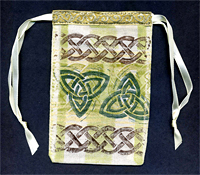
Decorate a Celtic Gift Bag

Rubber Stamped Celtic Gift Bag

Just in time for St. Patrick’s Day celebrations, here is an idea for decorating a drawstring muslin bag with Celtic designs. Fill with St. Patrick’s Day treats or a gift for someone who would enjoy Celtic designs at any time of year.

Click here for Decorate a Celtic Gift Bag.

Experiments with rubber stamping on fabric

This past weekend I had a lot of fun taking out fabric scraps and rubber stamping on them. Some of the stamps I used are from my Carolyn’s Stamp Store collection and some are stamps that I’ve hand carved and haven’t turned into a commercial product yet. Some of the geometric shapes used came from a Memory Essentials Terrific Tool & Tips set.

To get interesting backgrounds to stamp on, I experimented with brushing and sponging on Dye-Na-Flow paint and Crafter’s pigment inks. I did some masking with tape and also rolled some background stripes using a Memory Essentials Get Rollin’ tool.

Decoupage Gift Box

Upcycled Decoupage Gift Box

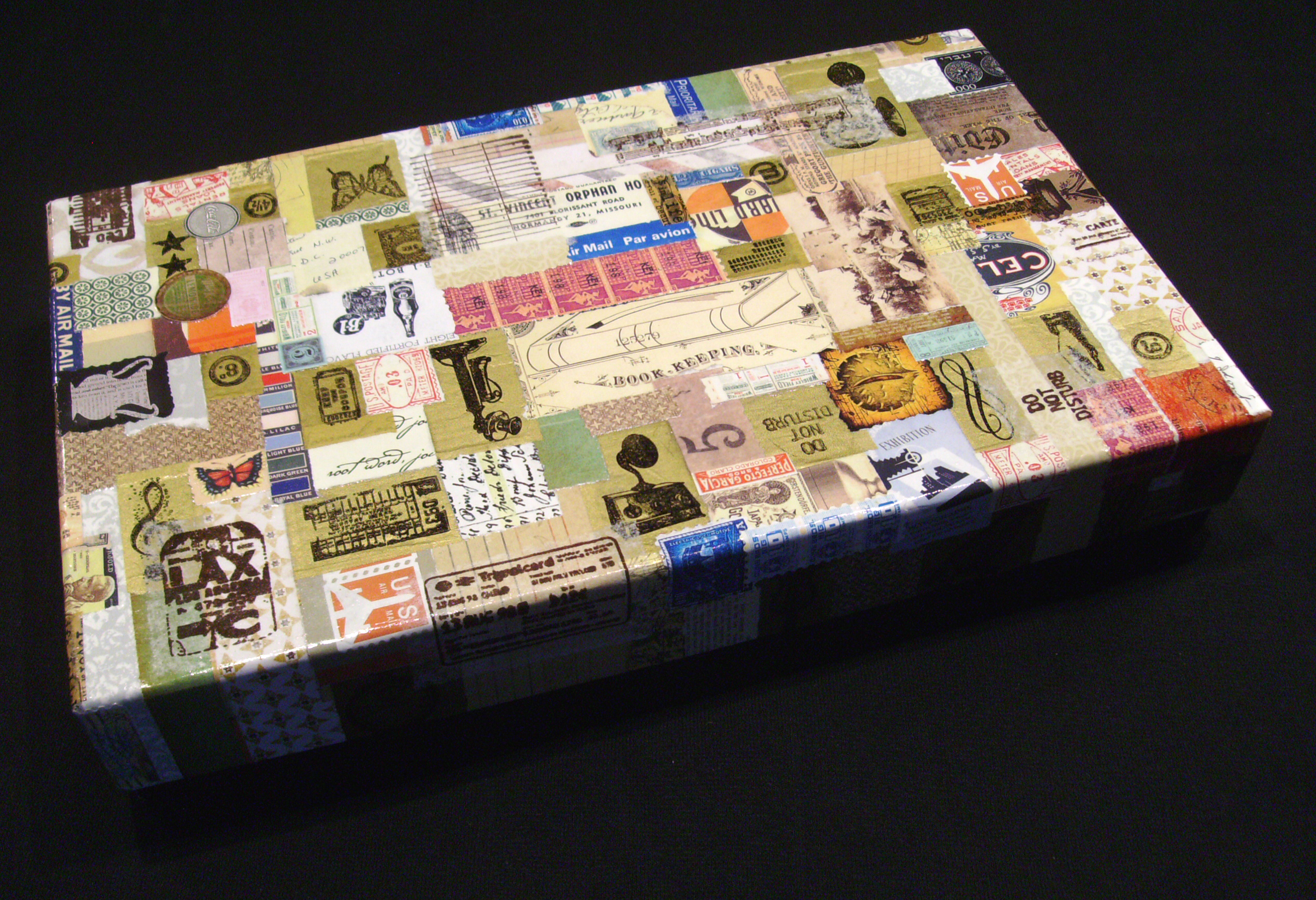
I repurposed this gift box into a nice storage box by doing some decoupage work on the lid. First I glued down antique imagery. Next I rubber stamped harmonious images onto gold and white tissue paper with Staz On permanent rubber stamp ink and glued those pieces down. After that layer was dry, I brushed varnish over the whole box top for durability.

Check out my Pinterest board for sources of free images to download and print out – Free Graphics and Fonts.

Sleep Pillows

Hand sewn eye pillows filled with sleep-inducing herbs. Pillows are
constructed with flaps that snap in back to make them easily refillable.

Fabric squares on front are rubber stamped, then appliqued and embroidered. Made from recycled fabric by Carolyn Hasenfratz.